2026-11-09 · Javier Soto
Cost Factors For Water Damage Restoration In El Paso CA
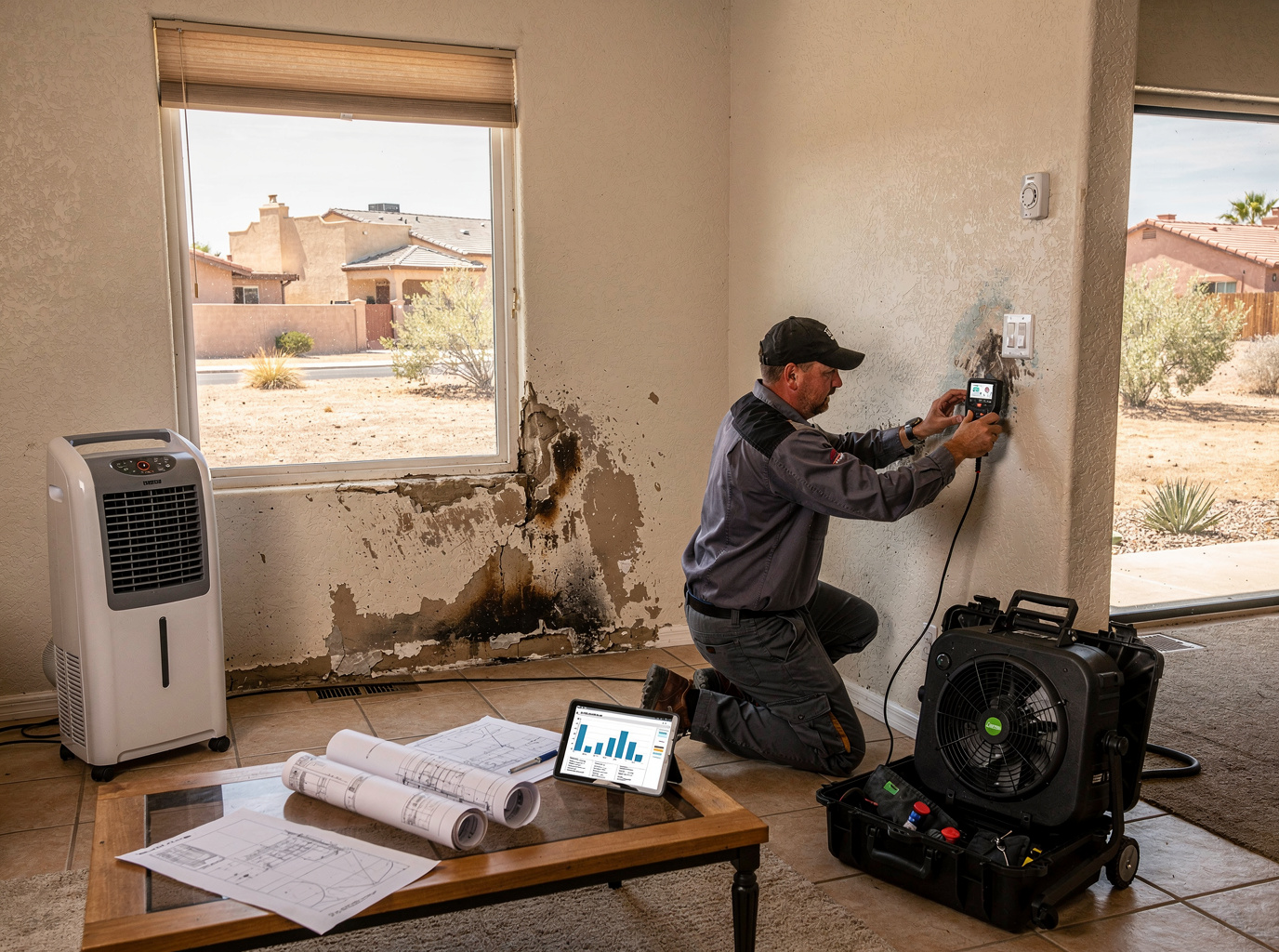
Water damage restoration costs in El Paso CA vary based on the scope of affected square footage, the category of water involved, and the materials that must be removed or dried. Local operators evaluate each property individually because older housing stock in areas such as Socorro and Horizon City often features slab foundations and limited crawl spaces that change drying strategies. Factors like the time water has been present and the need for content manipulation further influence the final invoice.
Extent of Damage and Square Footage
The size of the impacted area remains the largest single driver of total project cost. Technicians measure linear feet of baseboard, square footage of flooring, and volume of wall cavities that require demolition or drying. In El Paso homes built before 1980, plaster walls and hardwood subfloors absorb water differently than newer drywall assemblies, extending labor hours. Larger single-story ranch homes common in Horizon City demand more equipment than compact properties in denser neighborhoods. When water migrates under cabinets or into HVAC returns, additional demolition increases both time and material expenses. Property owners receive itemized estimates that separate demolition, drying, and reconstruction phases so they can see exactly where costs accumulate.
Category of Water and Contamination Level
Clean water from a supply line break costs less to handle than gray or black water that carries bacteria or sewage. Category 3 water requires full containment, antimicrobial application, and sometimes disposal of porous materials that cannot be salvaged. In the El Paso area, monsoon-season runoff can introduce silt and organic debris into crawl spaces, raising the contamination level and requiring extra PPE and disposal fees. Technicians test moisture readings at multiple depths to confirm that hidden pockets of saturation are addressed. Properties near the Rio Grande or irrigation canals face higher risk of repeated intrusion, which can affect long-term pricing if secondary damage appears later.
Materials Affected and Removal Requirements
Different building materials carry distinct restoration or replacement costs. Carpet and pad are usually removed and discarded, while hardwood may be dried in place if caught early. Tile over concrete slabs common in Sunland Park and Las Cruces homes often needs the grout lines addressed and sometimes the subfloor checked for delamination. Insulation in exterior walls must be cut out once saturation exceeds manufacturer limits. Electrical outlets and baseboard heaters located low on walls frequently require replacement after prolonged exposure. Each material decision is documented with before-and-after photos so homeowners understand why certain items appear on the estimate.
Access, Equipment, and Seasonal Timing
Tight floor plans and finished basements limit equipment placement and extend drying times. Homes in Fort Bliss housing areas sometimes have limited exterior access for large dehumidifiers, requiring smaller portable units that run longer. Summer heat accelerates evaporation but increases indoor humidity loads, while winter conditions slow the process. Technicians schedule daily moisture logs and adjust equipment placement accordingly. Homeowners who contact the team during business hours at 8420 El Camino Real # B, Atascadero, CA 93422 can arrange an on-site assessment that accounts for these local variables. Water Damage Restoration crews coordinate with Water Damage Repair specialists when structural members need evaluation. Additional guidance appears in the article on how to handle water damage after heavy rains in El Paso.
Preventing Additional Expenses
Acting quickly limits the spread into adjacent rooms and reduces the volume of materials that must be replaced. Homeowners in Ciudad Juárez and surrounding communities benefit from shutting off water at the main valve and documenting visible damage with photos before extraction begins. Proper ventilation and removal of standing water within the first 24–48 hours prevents mold growth that would otherwise require separate remediation. Scheduling follow-up visits ensures equipment is removed only after all moisture readings return to normal levels. These steps keep the overall investment focused on the original incident rather than secondary issues.